



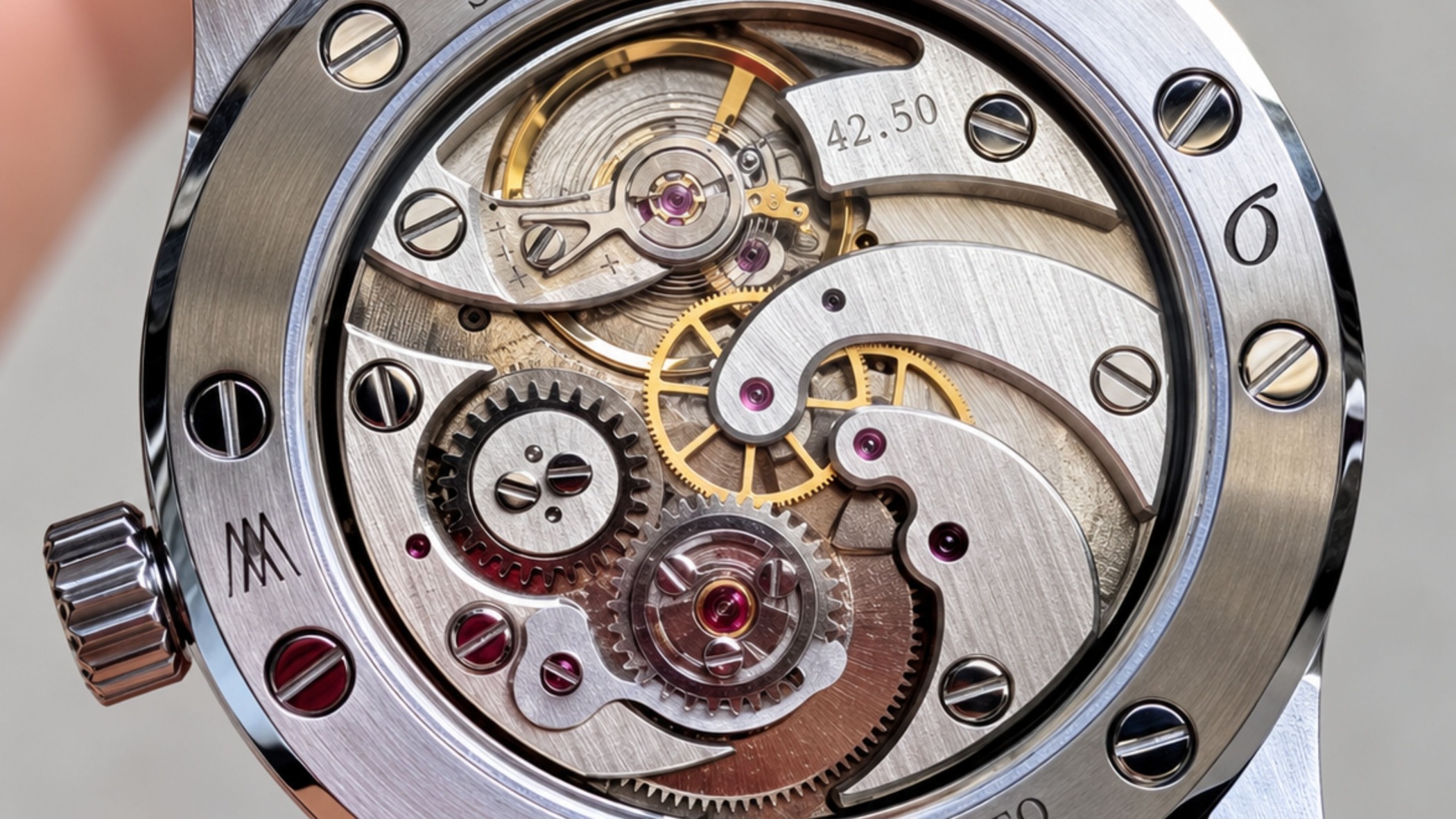
A watch measures time. Building one, however, takes a great deal of it.
Time to design a movement, manufacture each component, assemble it and regulate it. Then comes the time devoted to finishing, when technological precision meets the work of the hand.
It is from this balance that Inceptum was born. Founded in 2022 by Alessandro Metelli and Andrea Abeni, the independent Made in Italy watch brand brings together technical expertise, research and a shared passion for watchmaking. Both are PhD students and researchers at the Department of Mechanical and Industrial Engineering at the University of Brescia, and their project draws on Italian craftsmanship and the watchmaking tradition of the first half of the 20th century.
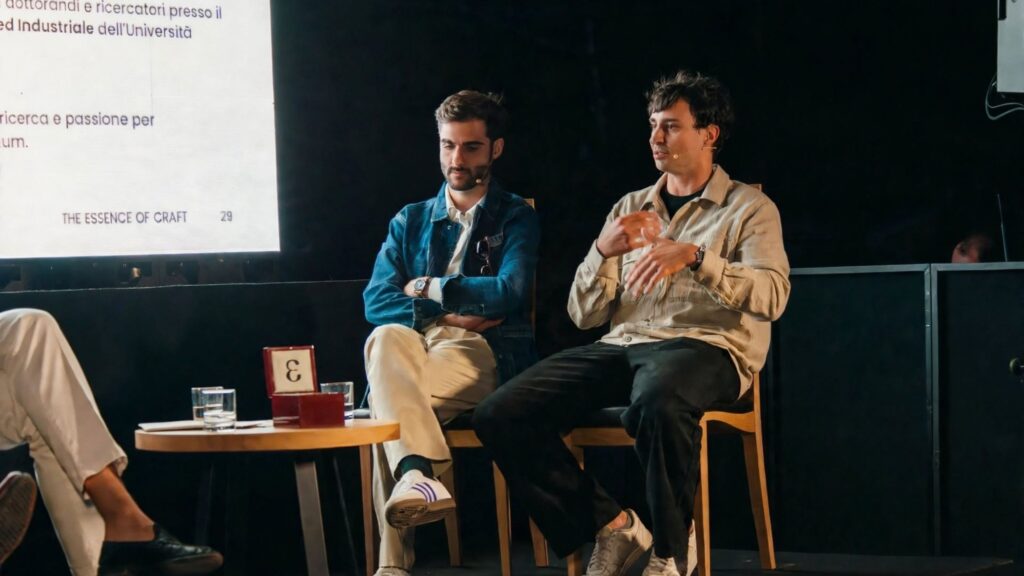
At the fourth edition of The Essence of Craft, Alessandro and Andrea explored precisely this meeting point: between engineering and manual skill, between what can be designed with extreme precision and what still requires the human hand.

Table of contents
From Engineering to Watchmaking
The story of Inceptum begins with two worlds that, on closer inspection, are not as far apart as they might seem.
On one side are mechanical engineering, research, design and the ability to measure with precision. On the other is a centuries-old craft built around minute components, meticulous workmanship and the exacting standards that have always defined watchmaking.
Alessandro and Andrea have brought these two worlds together in their own workshops.
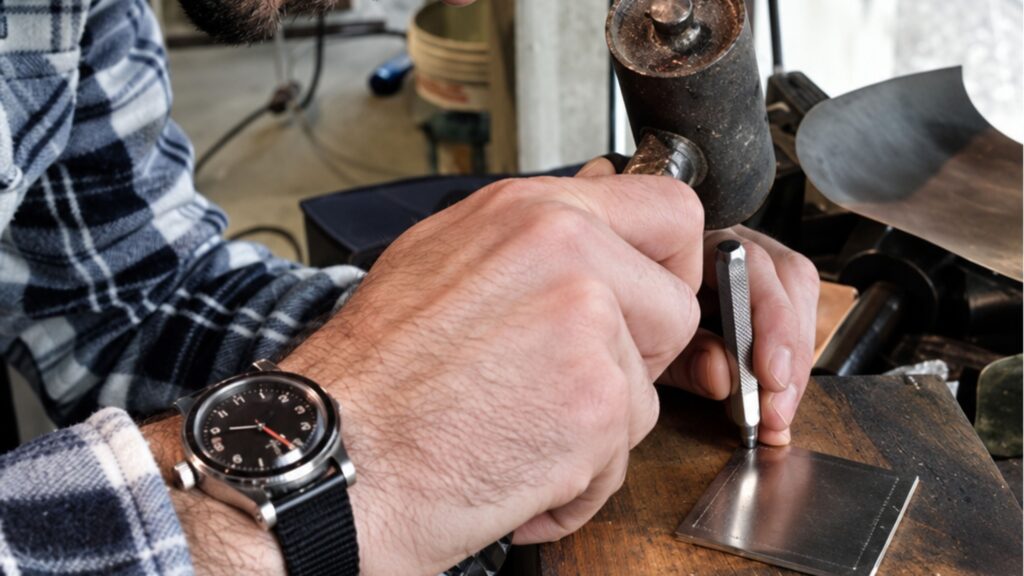
Here, Inceptum designs, prototypes, manufactures, assembles and regulates its watches. Movements, cases, hands and dials are produced by combining advanced manufacturing techniques with hand-finishing.
The process itself becomes part of the product’s identity. Understanding what happens inside a watch, designing its components and directly overseeing their production makes it possible to develop a distinctive language, one rooted in engineering, but not defined by engineering alone.
Epsilon: When Engineering Becomes Identity
This interplay can be found even in the smallest details.
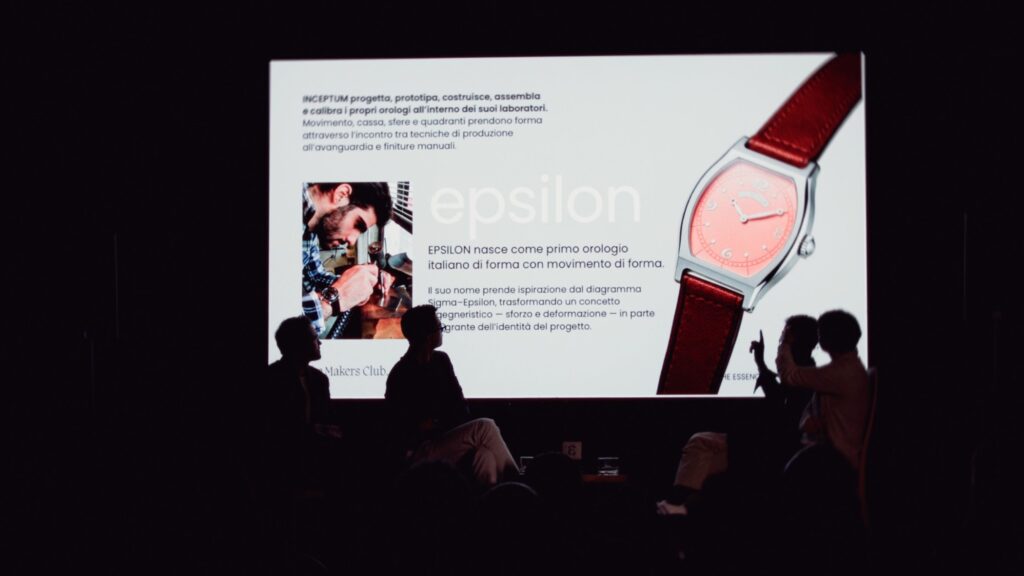
Epsilon was conceived as the first Italian shaped watch with a shaped movement. Its name is inspired by the Sigma–Epsilon diagram, used in engineering to describe the relationship between stress and strain: an engineering concept that has become part of the project’s identity.
A technical reference leaves the pages of textbooks and the research laboratory to become part of the identity of the watch itself.
It is a choice that says a great deal about Inceptum. Engineering does not remain hidden behind the finished product; it becomes part of the way the brand thinks, designs and communicates what it creates.
Even the name, then, carries something of the story of the people who imagined the watch.

Precision Still Comes Down to the Hands
Technology makes it possible to achieve ever greater levels of precision. For Alessandro and Andrea, however, this does not diminish the value of craftsmanship.
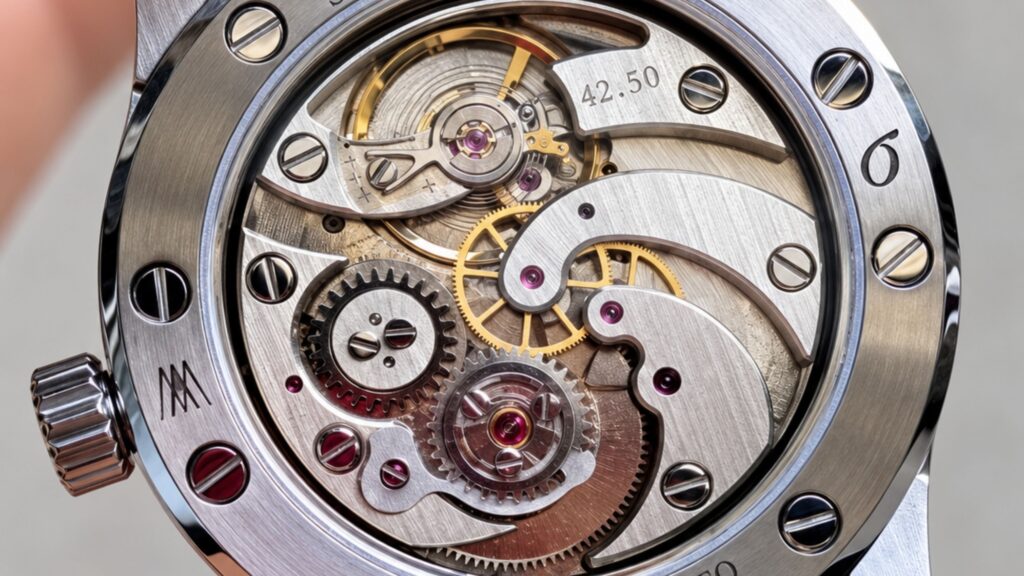
Hands, numerals, wheels and cases are carefully worked and finished. Satin finishing, beveling, perlage and Côtes de Genève bring the process back to the work of the hand, where even an almost imperceptible detail can contribute to the final result.
Inceptum sums up its approach to watchmaking in a simple idea: technology makes creation possible; the hand makes perfection possible.
It is a straightforward statement, but one that expresses a very contemporary relationship with craftsmanship.
Machine and hand do not belong to opposing worlds. One makes it possible to design and manufacture with precision; the other takes over where experience, sensitivity and attention to detail still make the difference.
Innovating Without Losing the Craft
Today, Inceptum continues to move towards increasingly independent production.
With its new I-02 manufacture calibre, the brand is developing an increasingly distinctive identity in the construction of the movement itself. In the material presented at The Essence of Craft, Alessandro and Andrea describe this evolution as an approach to craft in which innovation, precision and manual skill are all part of the same process.
It is an important step because it also reflects the ambition behind the project: to gain progressively greater control over what is made by developing expertise and solutions in-house.
Along this path, innovation does not mean moving away from watchmaking tradition. It means having the tools and knowledge to interpret that tradition through a language of their own.
Crafting Time
On the stage of The Essence of Craft 2026, Alessandro Metelli and Andrea Abeni presented a form of craftsmanship in which research, technology and manual work coexist within the same object.
Behind an Inceptum watch are design and calculations, prototypes and manufacturing processes. Then come assembly, regulation and the finishing stages that still require attention, experience and hands trained to recognise the smallest detail.
Perhaps this is the most compelling aspect of their project: there is no need to choose between technology and craftsmanship.
Use both.
To design with precision, build with expertise and continue to value what no machine can make entirely automatic.
Inceptum sums it up in just a few words: innovate without losing the craft.