
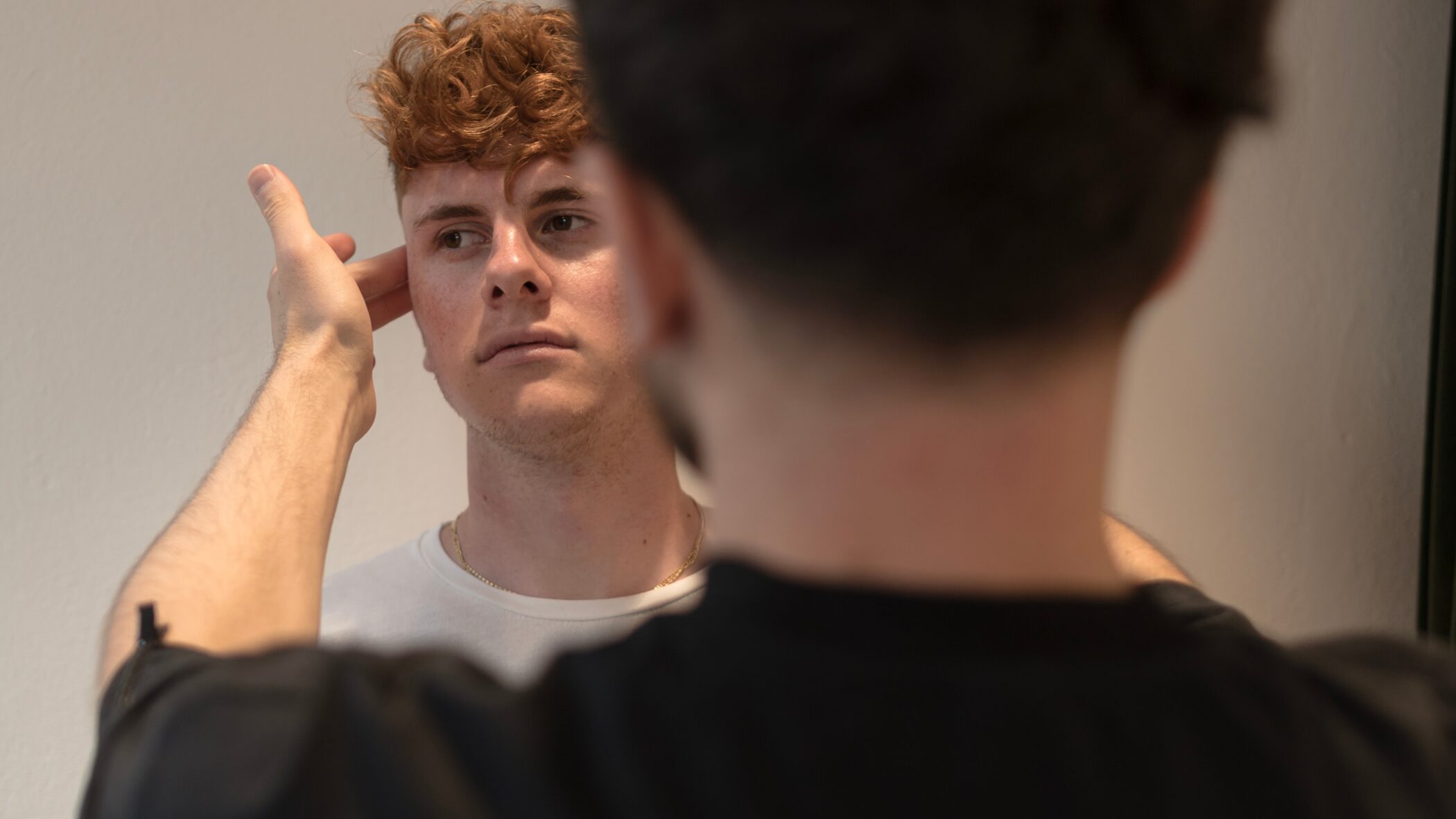
Entering the barbershop with a clear idea of the result you want is a great starting point, but being able to communicate it precisely and effectively is even more important, how many times have you sat in the chair with only a vague idea, struggling to explain it well, or nodded along just so you don’t look indecisive, even though you’re not fully convinced of what you’re about to get?
Often, the difference between a haircut that truly enhances your features and one that leaves you unsatisfied lies entirely in your dialogue with the barber, a great haircut depends not only on the skilled hands of the professional, but also on how clearly you express what you desire.
That is why we have created a practical guide to help you improve your conversation with your barber, clarity, listening, trust and consistency are the guiding principles.
Index
1. Come prepared: images, inspirations, expectations
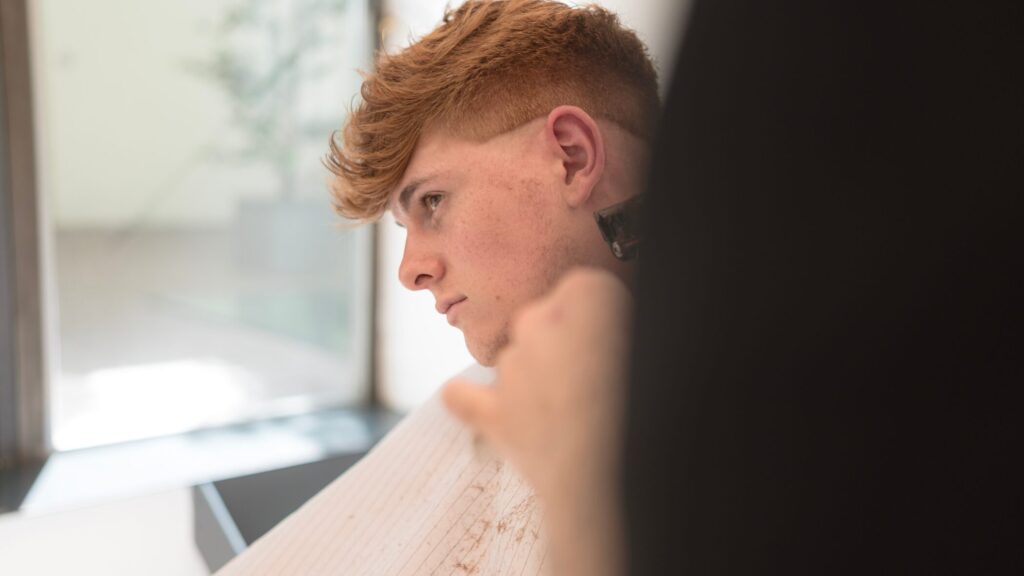
One of the best ways to communicate your idea of a haircut is to bring some visual references, whether it’s a photo you found online, an image of a well-known figure, or even a snapshot of a haircut you liked in the past, each picture helps the barber understand the general direction, however remember: there are no universal cuts, a look that works perfectly on someone with a certain face structure, hair type or forehead height may not be ideal for you. Consider the image as inspiration rather than an exact order to replicate, your barber will interpret it considering your facial structure, hair texture and lifestyle.
Example: If you want a “Peaky Blinders” style, feel free to show it, but listen to how it could be adapted to your face or hair density, a similar effect, more harmonious on you, might be the result.
2. Talk about your lifestyle, not just the look
A great haircut must align with your daily rhythm as well as your aesthetic, whether you travel often, play sports, work in formal or casual environments, whether you have time every morning for styling or absolutely none, these factors influence the haircut you choose, explain your lifestyle and habits to your barber, this allows them to propose a solution that is lasting, easy to manage and suited to your real needs.
Example: A very short fade with a high quiff requires styling every morning, if you know you’ll only use your hands and head out in a hurry, perhaps something more natural is preferable.
3. Avoid technical jargon unless you truly know it
Terms like “fade,” “undercut,” “taper,” “layering” may sound impressive, but if misused they create only confusion, you don’t need to be an expert, your role is not to describe the cut with technical vocabulary but to clearly express what you like and what you don’t, simple and direct words are far more effective.
Useful phrases include:
- “I’d like the sides short, but not shaved to the skin,”
- “I like some volume on top, but without overly sharp lines,”
- “I want the cut to be easy to manage, even without product,”
- “I prefer to slightly cover the ears,”
- “I want a clean look, but not too rigid,”
These indications are clear, visual, and easily interpretable by a professional.
4. Trust the barber’s advice
Once you’ve shared your vision, listen to the barber’s professional opinion, his experience is invaluable, sometimes the cut you envision isn’t the best for you, or it can be elevated with minor adjustments, a skilled barber doesn’t simply “follow orders,” but analyses your facial structure, assesses your hair quality and suggests solutions to create a harmonious effect, accepting guidance doesn’t mean compromising your taste, it actually means combining your ideas with the professional’s expertise.
5. Ask how to manage the haircut at home
A well-executed cut lasts through proper maintenance, so at the end of the appointment inquire how to preserve the result, useful questions include:
- Which products should I use (styling paste, wax, cream, spray)?
- Should I apply them on dry or damp hair?
- How much product is adequate?
- What’s the best styling technique?
- How often should I come back for a trim?
A considerate barber does more than cut hair, he guides you in daily upkeep of your look, recommends suitable products, and shares simple tricks to recreate the styling at home.
6. Come back regularly and provide feedback
Your relationship with your barber evolves over time, perfection in a cut is a process, not a one-time event, at your next visit share your experience: whether you found styling difficult, something didn’t convince you, or if you were delighted, this feedback helps the barber refine your cut, making each appointment more precise, efficient and effective.
7. Foster the relationship: your barber is also an image consultant
Beyond haircuts, your barber can become a reference point for your personal style, beard, mustache, skincare, coloration, natural products, grooming habits, when you find a professional you connect with, rely on his knowledge to build a coherent and impactful image, ongoing communication, mutual trust and open exchanges turn each visit into a moment of aesthetic growth.
Conclusion: the perfect haircut is born from dialogue
Knowing how to speak to your barber is an underrated yet essential skill, technical terms aren’t necessary nor expert phrasing, what matters is clarity, sincerity and an openness to listen, your role is to convey needs, tastes and expectations, his role is to interpret, enhance and propose harmonious solutions, the barbershop isn’t merely a place to cut hair, it’s a space of trust where you build an image that reflects you, with the right approach your barber becomes your ally in style, and the result will always honor your personality.